· Atlas des Trésors
Poland: at Westerplatte, archaeologists uncover the ground the defenders of 1939 walked on
This is where the first shots of the Second World War were fired, on 1 September 1939. On 13 November, the Museum of the Second World War in Gdańsk presented the results of its thirteenth excavation season: the remains of the barracks, more than 2,700 objects, 28,000 munitions, and human remains that may be those of a Polish soldier.
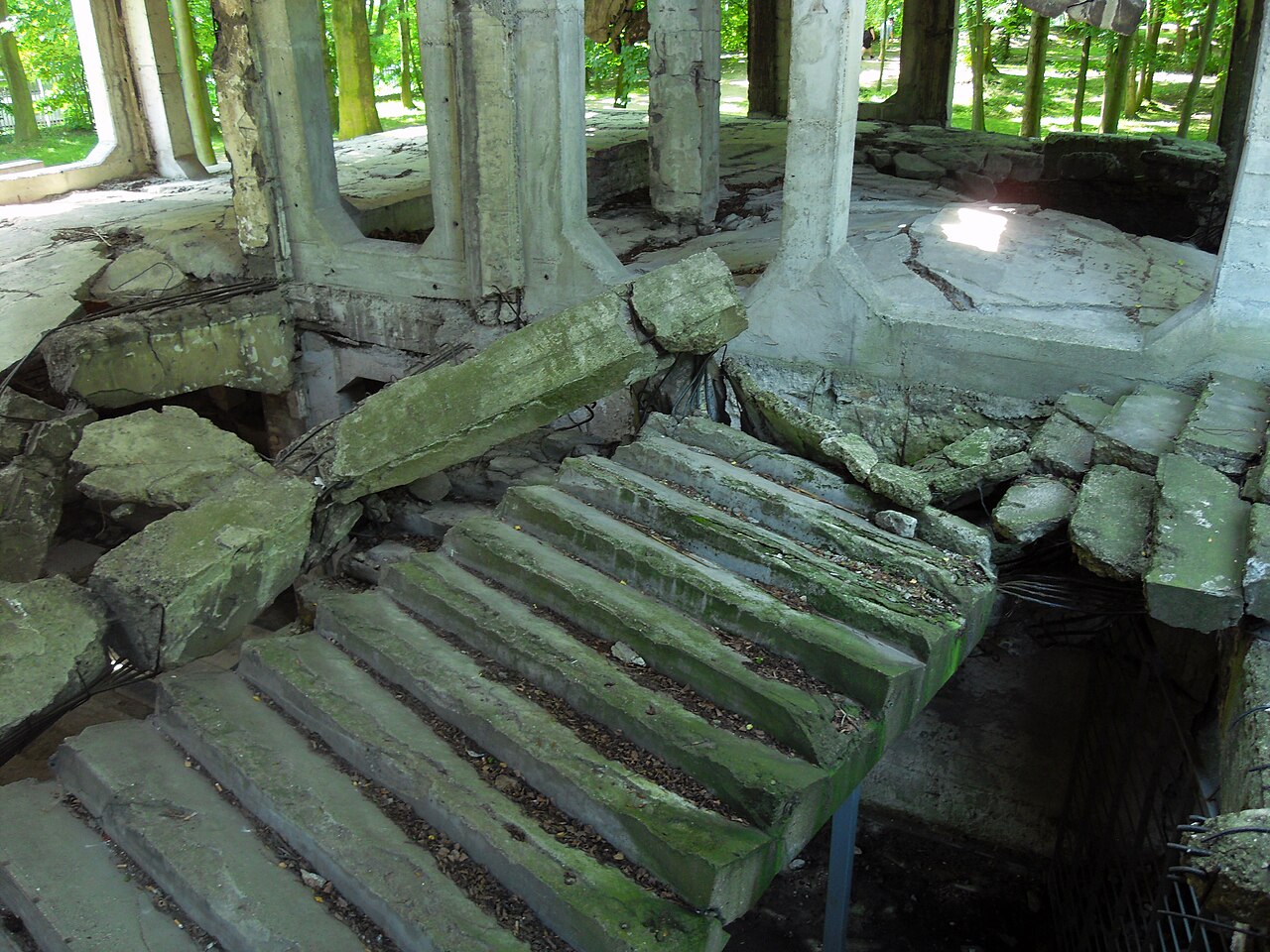
At Westerplatte, a peninsula at the entrance to the port of Gdańsk in Poland, archaeologists have been excavating since 2016 the place where the Second World War began in Europe. On 13 November 2026, the Museum of the Second World War in Gdańsk published the results of its thirteenth season. It reached the heart of the site: the barracks that housed the command post of the Polish defenders. The museum also announced the discovery of human remains, on 5 November, on the neighbouring construction site of the future Westerplatte Museum.
Seven days in September 1939
In the 1930s, Gdańsk was called Danzig and was a "free city". At Westerplatte, Poland had a Military Transit Depot guarded by a small garrison. At dawn on 1 September 1939, the German battleship Schleswig-Holstein opened fire on the depot. Around 200 Polish soldiers, commanded by Major Henryk Sucharski and his deputy, Captain Franciszek Dąbrowski, held out for seven days against far superior forces before surrendering on 7 September. In Poland, Westerplatte has become a symbol of resistance.
The barracks, heart of the defence
The 2026 excavations ran from 9 April to 10 August, over 479 m²: 292 m² in the north wing of the "new barracks" and 187 m² on the former assembly ground.
The barracks were built between 1935 and 1937. It was a two-wing reinforced-concrete building, very modern for its time, with dormitories, a kitchen, a mess hall, an infirmary and an arms store. It also housed the commander's office, a radio station, a telephone exchange and machine-gun positions.
The building came through the fighting of 1939 fairly well. It was the end of the war that destroyed it: in early April 1945, ammunition stored by the Germans in the basement of the north wing exploded. The floors collapsed and a huge crater opened up. It was filled in after the war. Today, only the ruins of the south wing can be seen.
A garage, a gunsmith's workshop and a 20-metre crater
Beneath the fill, the archaeologists found the concrete remains of the gunsmith's workshop and the garage, with their access ramp. The concrete is cracked and the reinforcing bars twisted. A floor of blue-grey and brown clinker tiles survives, along with an inspection pit used for repairing vehicles.
On the assembly ground, almost all of the original surface has gone, blown away by the explosion. The archaeologists excavated part of the crater: its diameter may be as much as 20 metres.
Archaeologist Adam Dziewanowski, who has worked at Westerplatte for years, sums up what is at stake: the team has uncovered the level the Polish defenders walked on in 1939, where the command post, the garrison's main shelter and the dressing station stood. These remains will not be covered over again: they will be shown to visitors. "We are restoring the authenticity of the battlefield," he says.
A mortar base plate and a dog's bowl
More than 2,700 objects were collected, nearly 900 of them judged to be of great value to the museum. They include:
- the base plate of a Polish 81 mm mortar, model 1931, one of the defenders' four mortars;
- a piece of a window frame from the barracks that keeps its original paint, in a shade known as "English pink", chosen to disguise the building's military role;
- a repaired Polish army mess tin, probably mended by a civilian prisoner forced to work on the site after the depot was taken;
- a dog bowl. Two dogs lived at Westerplatte during the fighting: Eros, Major Sucharski's dog, and Beza, Captain Dąbrowski's. The bowl belonged to one of them.
The ground also yielded older traces: musket balls from the Napoleonic Wars, and crockery, bottles and coins from the 19th century, when Westerplatte was a seaside resort.
28,000 munitions to make safe
The most striking figure lies elsewhere: around 28,000 explosive or dangerous items were taken out of the ground. Most are munitions stockpiled by the Germans at the end of the war: Mauser rifle cartridges, shell fuses, shells from 20 to 150 mm, hand grenades. A bomb disposal expert secured them before their destruction.
Human remains discovered on 5 November
In parallel, archaeologists are monitoring the construction site of the future Westerplatte Museum, whose first stage covers more than 116,000 m² and is due to last until June 2027. On 5 November 2026, while uncovering the foundations of a former Prussian fort used during the defence of 1939, they found human remains.
Around the body were Polish uniform buttons, a model 1929 bayonet in its scabbard and a sapper's boot. These objects point towards Legionnaire Mieczysław Krzak, a defender who fell in this sector in September 1939. This is only a hypothesis: the identification has not been confirmed, and further analyses may be carried out.
It would not be the first time. In 2019, the graves of nine Polish soldiers were found at Westerplatte. Seven were identified through genetic testing, and all were reburied in 2022 in the site's new military cemetery.
Poland and the war on the Atlas
The Second World War also changed the fate of Poland's treasures. On the Atlas, discover the Polish crown jewels, Raphael's Portrait of a Young Man, which vanished during the war, the legend of the Wałbrzych gold train, and all our content on Poland.
 Hungary: 208 Celtic silver coins found 40 cm underground, beneath a future power substation in Szombathely
 Sutton Hoo: a new Anglo-Saxon grave, with brooch, knife and tweezers, found far from the royal mounds
 Havmanden wreck: a luxury shoe and manillas on the Danish ship of the 1683 mutiny