· Atlas des Trésors
Havmanden wreck: a luxury shoe and manillas on the Danish ship of the 1683 mutiny
Off Gothenburg, divers from the National Museum of Denmark studied the wreck of the Havmanden, a slave ship sunk in 1683 after the most violent mutiny in Danish maritime history. They found a man's shoe of rare quality, perhaps that of the governor thrown overboard, and two manillas, a currency of the slave trade.
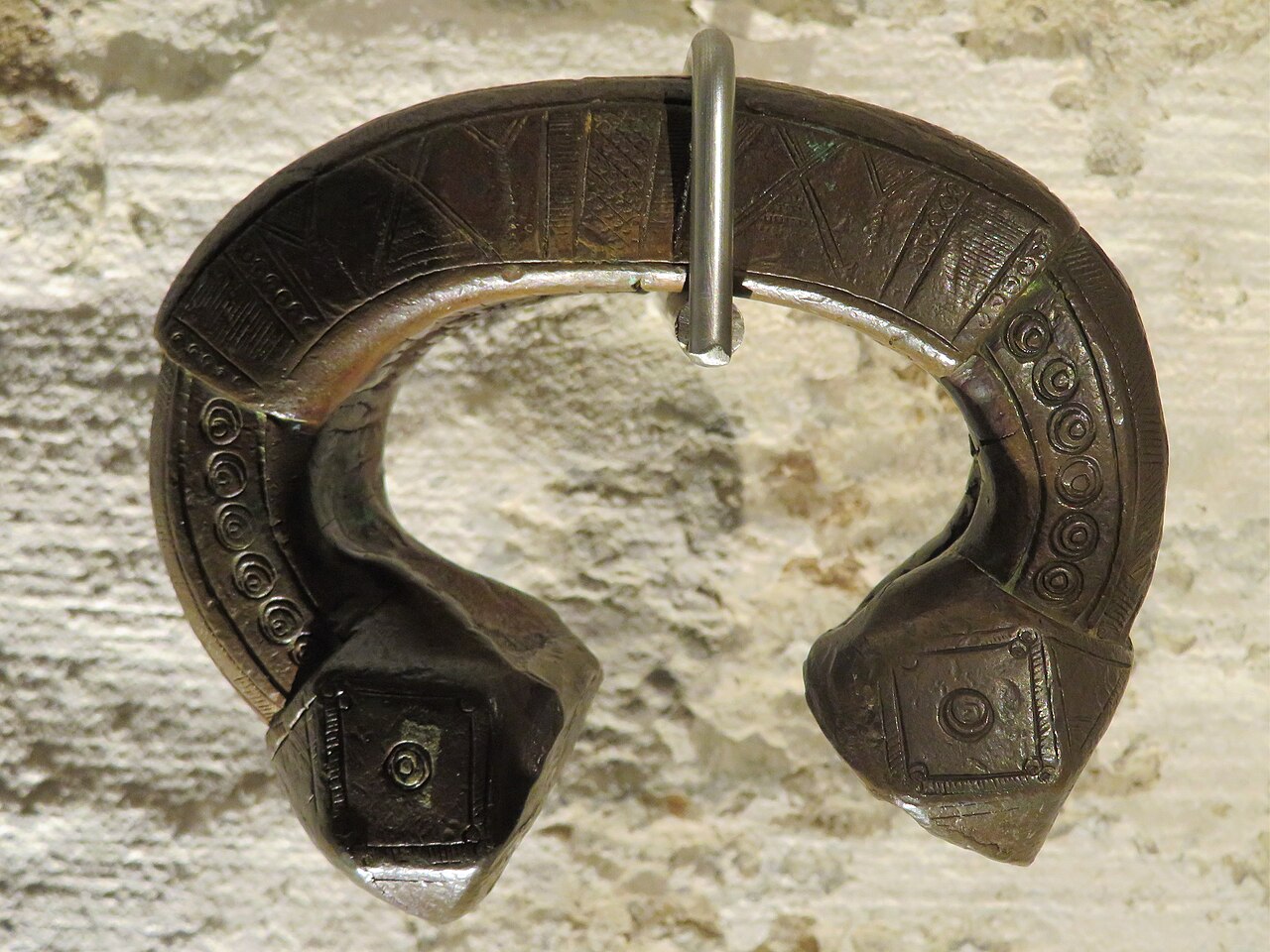
On 11 November 2026, the National Museum of Denmark (Nationalmuseet) presented the results of dives on the wreck of the Havmanden, a Danish ship that sank in 1683 in the archipelago north of Gothenburg, in Sweden, after a mutiny. Archaeologists from NJORD, the museum's centre for maritime and underwater heritage, worked with the Bohuslän Museum in Sweden. They brought up a man's shoe of exceptional quality and two manillas, metal rings used as currency in the slave trade.
A slave ship that left Copenhagen
The Havmanden, a frigate of about 35 metres, had been given to the Danish West India and Guinea Company. It left Copenhagen on 6 November 1682 for St Thomas, the Danish colony in the Caribbean. According to the Danish science website Videnskab.dk, the ship was then meant to sail on to West Africa to buy captives.
About 200 people were on board: around a hundred prisoners from Copenhagen, about twenty of them women, indentured servants, company employees, some forty sailors, and the family of the governor, Jørgen Iversen Dyppel, the first Danish governor of St Thomas, returning to his post.
The mutiny
In the English Channel, part of the crew rose up. The mutineers shot the captain, then threw the governor overboard: he drowned on 20 January 1683. Other men were thrown into the sea in the following days. The mutineers headed for the Azores, where some passengers were put ashore, then sailed north again. A storm drove the ship onto the rocks of the island of Risön, near Gothenburg. The people on board and much of the cargo were saved, but the ship was lost. The mutineers were arrested; in Copenhagen, nine ringleaders were sentenced to death and executed.
For Nationalmuseet maritime historian Asger Nørlund Christensen, it is the most violent and spectacular mutiny in Danish maritime history. The most detailed account comes from a crew member, Simon Braad, whose handwritten testimony is kept in the Danish National Archives.
The governor's shoe?
The wreck was located in 1999. In 2026, diver and archaeologist Andreas Kallmeyer Bloch brought up a piece of leather without paying it much attention. All that remains is the back half of the sole of a man's shoe. For Vivi Lena Andersen, director of the Rudersdal museums and a specialist in historical footwear, the quality is exceptional: "I have never before seen a shoe of such high quality," she says in the press release, adding that it was an expensive shoe only the elite could afford.
It may have belonged to Governor Dyppel. That is the team's most likely guess, but it cannot be proven: no mark identifies the owner, and other high-ranking men were on board, such as the Dutch captain or a merchant. A finely made button, perhaps also worn by an important passenger, was found as well.
Manillas, the currency of the slave trade
The two manillas are horseshoe-shaped metal rings. In West Africa, Europeans used them to pay for captives. According to the historical sources cited by Videnskab.dk, the Havmanden carried two barrels of them. Such objects are rare in Scandinavia. For Andreas Kallmeyer Bloch, they underline the ship's link to the slave trade. Their presence does not, on its own, prove that the ship carried captives on its last voyage, which ended before Africa.
A ship dated by its trees
Dendrochronology, dating by tree rings, shows that the trees of the hull were felled around 1664 or shortly after, in northern Germany or southern Jutland. This fits the sources saying the ship was built at Haderslev in the early 1670s. To limit erosion by the currents, the wreck has been covered with a geotextile.
Shipwrecks on the Atlas
The Havmanden is almost contemporary with the Vasa, the Swedish warship that sank in 1628 and is on display in Stockholm. Find other lost ships in our theme Wrecks and sunken treasures, our guide Famous treasure galleons and shipwrecks, and the Denmark and Sweden pages.
Sources
- Musée national du Danemark (Nationalmuseet), communiqué via Ritzau: Sjælden sko og slavebetaling fundet på dansk slaveskib (11 November 2026)
- Videnskab.dk (Lise Brix): Usædvanligt fund på vraget fra danmarkshistoriens nok mest dramatiske mytteri (11 November 2026)
- Arkeonews: Danish Shipwreck Yields Luxury Shoe Possibly Linked to Murdered Governor and Slave-Trade Currency (15 November 2026)
Read also
 Hungary: 208 Celtic silver coins found 40 cm underground, beneath a future power substation in Szombathely
 Sutton Hoo: a new Anglo-Saxon grave, with brooch, knife and tweezers, found far from the royal mounds
 Vix treasure: a chip of red coral on the krater, perhaps "Medusa's blood", and the figurine's hand found