· Atlas des Trésors
Treasure found in France: who does it belong to? What the law says
Finding a treasure does not automatically make you its owner. Between the Code civil, the Code du patrimoine and the 2016 reform, here is what the official texts provide for, and the right steps to take.

Coins under a floorboard, an old piece of jewellery in a field: the scene is the stuff of dreams, but it is governed by precise rules. In France, the answer to the question “who does the treasure belong to?” depends on two sets of texts: the Code civil (Civil Code), which defines treasure and how it is shared, and the Code du patrimoine (Heritage Code), which takes over as soon as the object is of historical or archaeological interest.
This article is for information purposes only. It is no substitute for the advice of a lawyer, a notary or the relevant regional archaeology service, who alone can assess a specific situation.
What the law calls “treasure”
The basic rule is set out in article 716 of the Code civil, in force since 1804. The text defines as treasure any hidden or buried thing that no one can prove they own, and that was discovered purely by chance. There are therefore two conditions: no identifiable owner, and a chance find.
The same article organises how it is shared:
- if you find the treasure on your own land, it belongs entirely to you;
- if you find it on someone else's land, it is shared half and half between the person who discovered it (the “inventeur”, in legal vocabulary) and the owner of the land.
This rule remains the general law. But it gives way to the Code du patrimoine as soon as the object falls within the field of archaeology.
Archaeological discovery: declaring it to the mayor is compulsory
Article L531-14 of the Code du patrimoine covers the uncovering of remains or objects that may be of interest to prehistory, history, art or archaeology. In this case, both the finder and the owner of the land must declare the discovery immediately to the mayor of the municipality, who passes it on to the prefect. The owner is responsible for the temporary conservation of immovable remains, and the authorities may visit the site and prescribe conservation measures. According to the direction régionale des affaires culturelles (DRAC, regional cultural affairs directorate) Grand Est, the declaration is also sent to the regional archaeology service.
The consequences can be significant: article L531-15 allows the State to carry out further research itself or to authorise it, and to suspend work for six months, a period during which the land is treated as a listed site.
Failing to declare, or making a false declaration, is punishable by a fine of 3,750 euros (article L544-3).
Since 2016, a presumption of State ownership
This is the point that surprises people most. Law no. 2016-925 of 7 July 2016 created article L541-4 of the Code du patrimoine, in force since 9 July 2016. For movable archaeological property discovered on land acquired after this law came into force, article 716 of the Code civil no longer applies: such property is presumed to belong to the State.
In the case of a chance discovery, this presumption applies from the moment the scientific interest of the object is recognised. Recognition results from an administrative act, taken after consulting a commission of experts, no later than five years after the declaration; during the procedure, the object is placed in the custody of the State. Public appropriation may be challenged before the administrative courts on the grounds of a lack of scientific interest, and, at any time, before the ordinary courts by anyone who can prove a title of ownership predating the discovery.
For land acquired before this law, article L541-5 provides for a different regime. The objects are entrusted to the State's archaeological services for study, for a maximum of five years. The State notifies the owner of the land of their rights and, if the discovery was made by chance, the finder too. If neither comes forward within the year, a second notification is sent; a further year of silence results in ownership being transferred to the State free of charge. If only one of the two asserts their rights, the property is shared between that person and the State according to the general law.
In addition, the State may claim movable archaeological property in the public interest, in return for compensation (article L541-8). Finally, selling or dividing up, without prior declaration, an archaeological assemblage recognised as coherent is punishable by a fine of 3,750 euros (article L544-4-1).
Metal detectors: prior authorisation is compulsory
Article L542-1 of the Code du patrimoine is clear: no one may use a device for detecting metal objects to search for monuments or objects of interest to prehistory, history, art or archaeology without prior administrative authorisation. This is granted according to the applicant's qualifications and the nature of the research project. The DRAC Grand Est specifies that it is issued by the prefect and that the landowner's consent is also required.
The penalties are graduated:
- using a detector for this type of search without authorisation, or without complying with its conditions, is a fifth-class petty offence (article R544-3), meaning a fine of up to 1,500 euros for a first offence (article 131-13 of the Code pénal, the Criminal Code);
- digging excavations or test pits to search for such objects without authorisation, including on your own land, is punishable by a fine of 7,500 euros (article L544-1).
The DRAC Grand Est also points out that digging after a detector signal amounts to carrying out an unauthorised excavation.
What to do if…
- You come across an old object while gardening or during building work: stop digging, do not continue uncovering it, and declare the discovery to the town hall without delay. The landowner must also declare it.
- The object has already been taken out of the ground: keep it as it is and report it in the same way; if you have handed it to someone, that person is also obliged to declare it, according to the DRAC Grand Est.
- You discover something on someone else's property (a rental, a building site, borrowed land): inform the owner; the duty to declare falls on them as well as on you.
- You wish to search with a detector: first make enquiries with the regional archaeology service in your region and obtain authorisation from the prefect as well as the owner's written consent.
- You want to sell the object: wait until you know its status. If it is part of the archaeological heritage, ownership may pass to the State or be shared.
- Your situation is in dispute: consult a legal professional.
Very real treasures
To gauge what is at stake, several entries in the Atlas present treasures unearthed in France: the Pouan treasure, the Rethel treasure, the Berthouville treasure, the Guînes gold hoard and the Fenouillet gold torcs.
Sources
- Code civil, article 716 – Légifrance (in French)
- Code du patrimoine, découvertes fortuites (articles L531-14 et suivants) – Légifrance (in French)
- Code du patrimoine, régime de propriété du patrimoine archéologique (articles L541-1 à L541-9) – Légifrance (in French)
- Code du patrimoine, article L542-1 – Légifrance (in French)
- Code du patrimoine, article L544-1 – Légifrance (in French)
- Code du patrimoine, article L544-3 – Légifrance (in French)
- Code du patrimoine, article L544-4-1 – Légifrance (in French)
- Code du patrimoine, articles R544-3 et R544-4 – Légifrance (in French)
- Code pénal, article 131-13 – Légifrance (in French)
- Les découvertes archéologiques fortuites – ministère de la Culture, DRAC Grand Est (in French)
- L'utilisation des détecteurs de métaux soumise à autorisation préfectorale – ministère de la Culture, DRAC Grand Est (in French)
 Hungary: 208 Celtic silver coins found 40 cm underground, beneath a future power substation in Szombathely
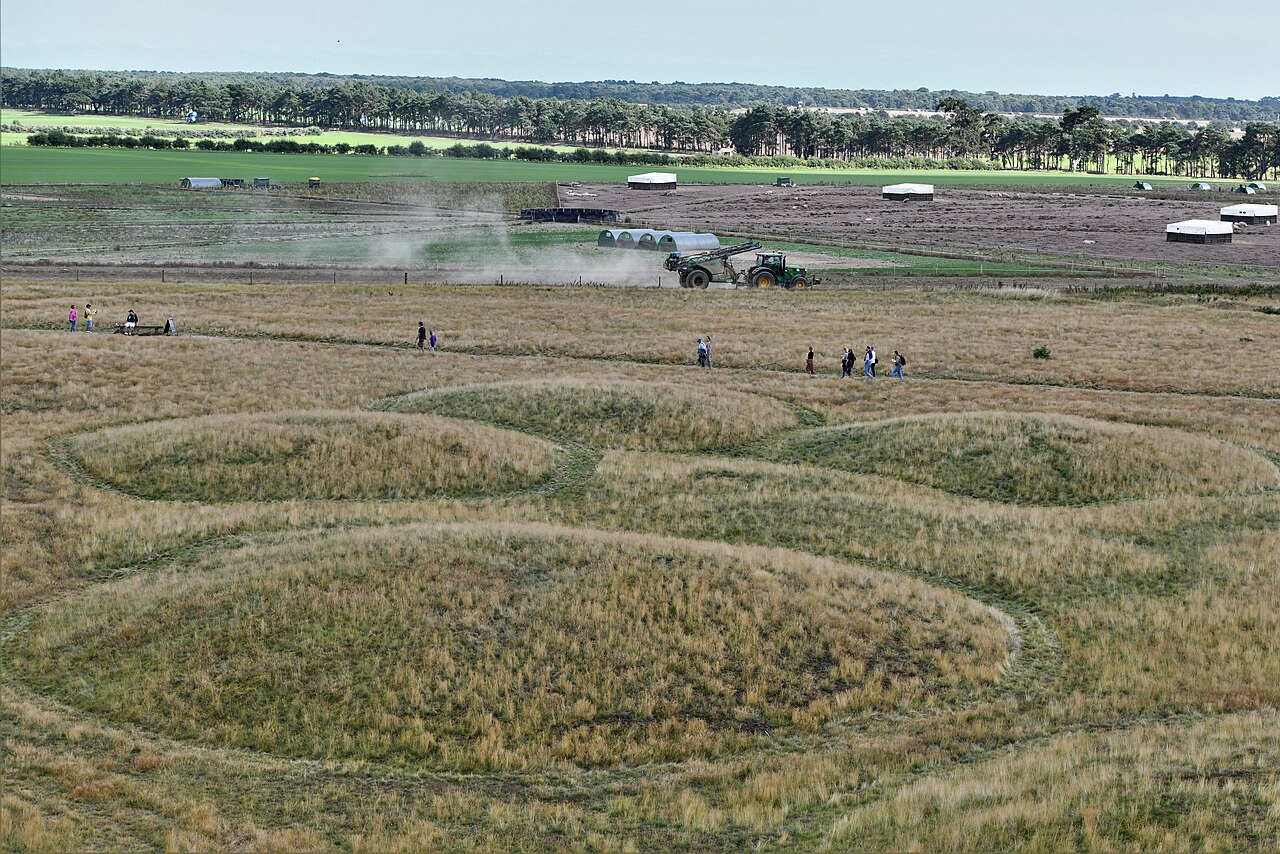 Sutton Hoo: a new Anglo-Saxon grave, with brooch, knife and tweezers, found far from the royal mounds
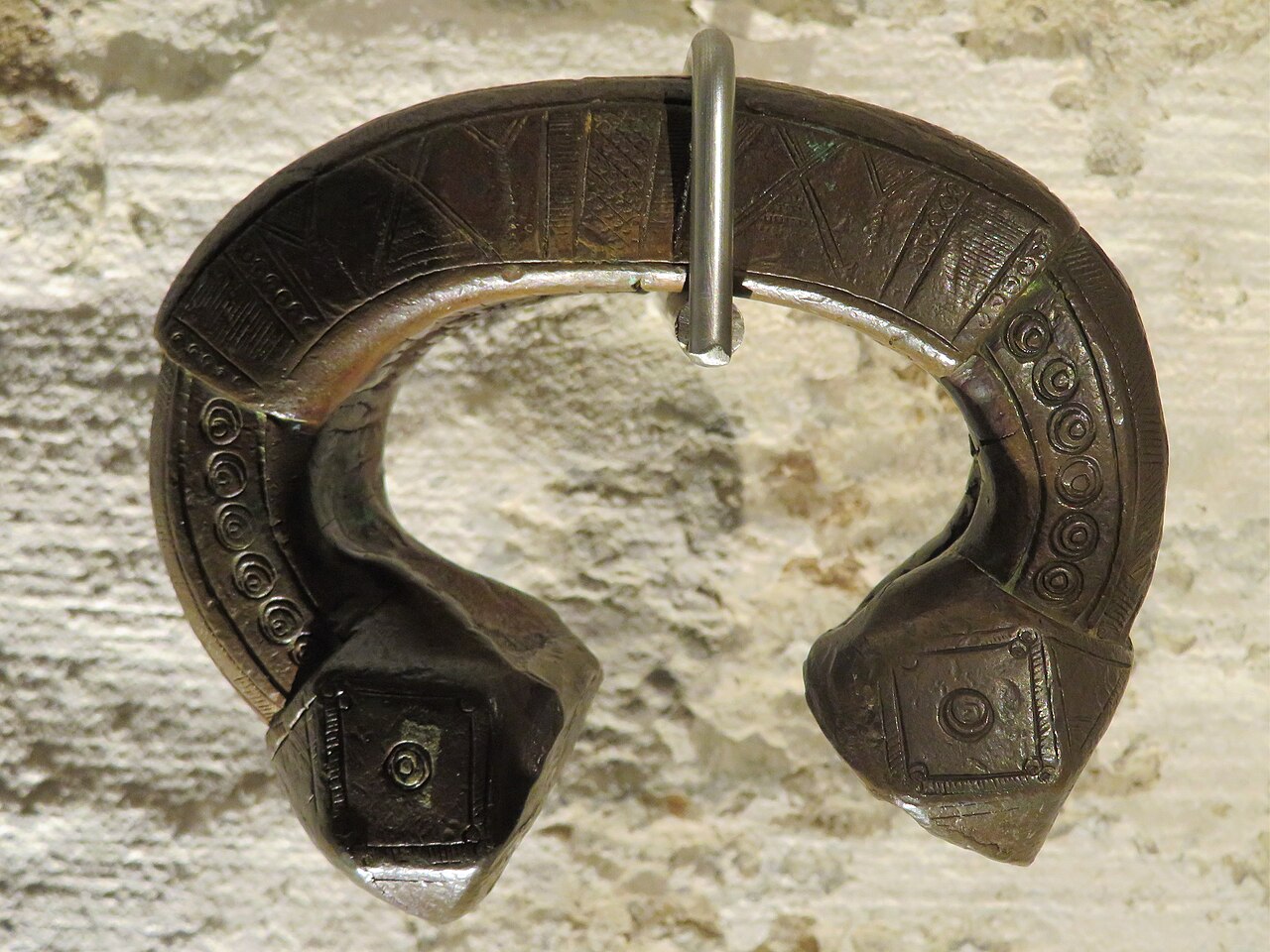 Havmanden wreck: a luxury shoe and manillas on the Danish ship of the 1683 mutiny